Silex World Advances Distributed Refining Model to Process Critical Materials Closer to Source
Critical materials closer to feedstock sources & regional manufacturing, reducing the need for long-distance transport.
Press Release Disclaimer: This is a press release distributed through the XPR Media network. It has not been independently verified by our newsroom.
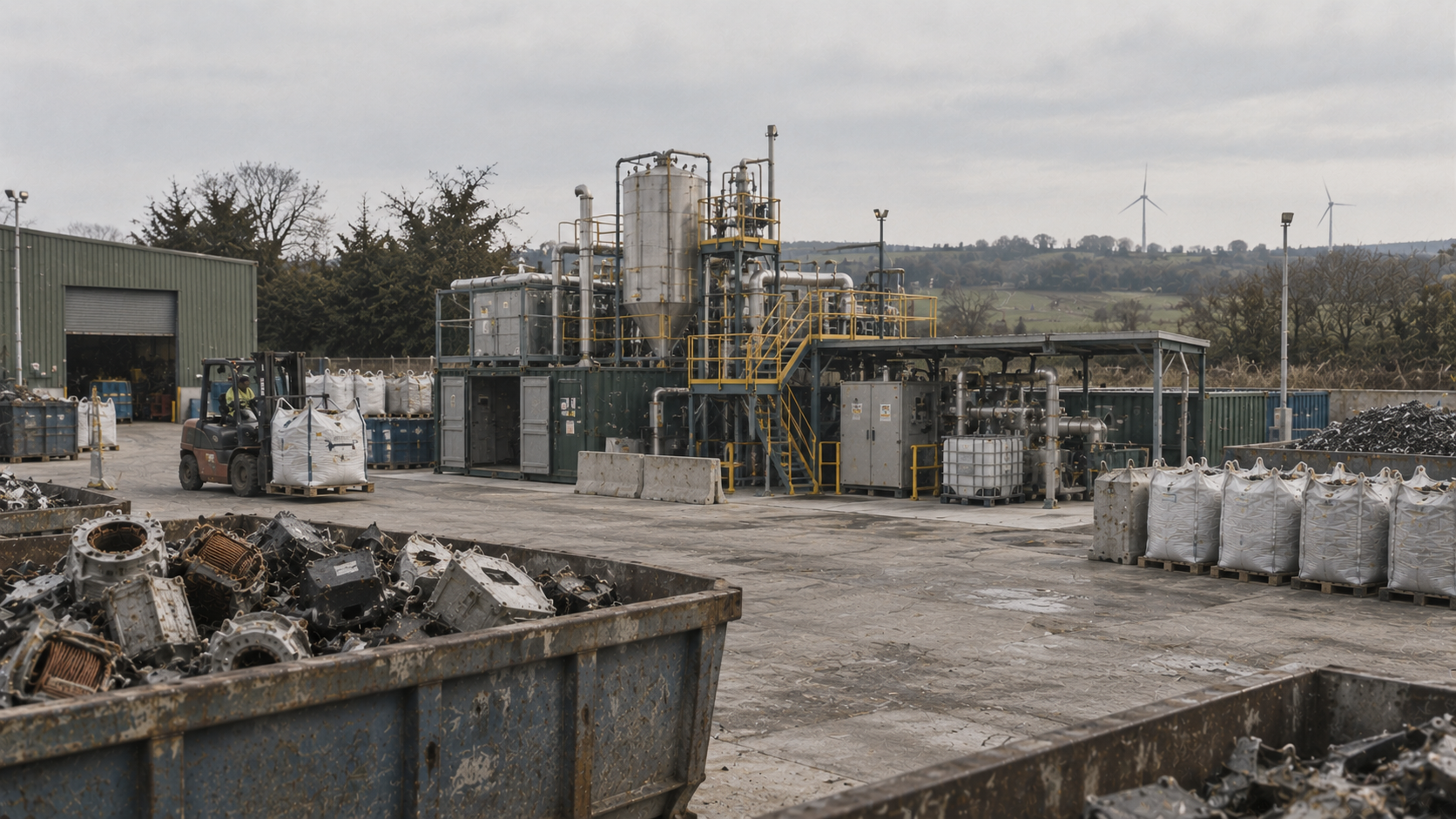

Critical materials closer to feedstock sources & regional manufacturing, reducing the need for long-distance transport.
LEEDS, WEST YORKSHIRE, UNITED KINGDOM, September 17, 2026 /EINPresswire.com/ — Silex World Ltd, a University of Leeds spinout focused on critical materials processing, today announced the continued development of its distributed refining strategy, designed to locate modular critical materials processing capability closer to feedstock sources and regional manufacturing demand.
The company believes the next generation of critical materials infrastructure will not necessarily depend solely on very large, centralised processing complexes.
Instead, Silex World sees an opportunity for networks of appropriately scaled processing facilities located within industrial regions, enabling materials to be recovered and processed closer to where they arise and closer to manufacturers that ultimately require them.
The strategy builds upon Silex World’s work in rare earth recovery, multi-feedstock processing, urban mining, continuous low-energy processing and modular refining.
Its objective is straightforward: move the processing capability closer to the material rather than routinely moving complex materials around the world for processing.
Reducing the Distance Between Resource and Manufacturing
Critical material supply chains can involve multiple international movements between extraction, concentration, refining, separation and manufacturing.
Secondary materials present an additional challenge.
End-of-life magnets, electronic equipment, manufacturing scrap and industrial residues can be bulky, heterogeneous and relatively low in value before the strategic materials contained within them are recovered and upgraded.
Silex World believes regional processing could provide an alternative model for selected feedstocks.
Rather than transporting these materials over long distances to a limited number of processing centres, modular facilities could potentially recover and upgrade materials within the industrial regions where those resources originate.
The resulting products could then enter regional or international manufacturing supply chains in a more concentrated and usable form.
Michael Hodges, Founder of Silex World Ltd, said:
“We believe processing should increasingly move towards the resource. There is little value in transporting complex waste and secondary materials thousands of miles if they can be processed closer to where they arise.”
He added:
“Our objective is to develop processing infrastructure that can be deployed at an appropriate regional scale, connecting local resources with local and international manufacturing demand.”
A Different Model for Critical Materials Infrastructure
Traditional refining infrastructure can require substantial capital investment, extensive supporting infrastructure and large volumes of consistent feedstock.
Silex World’s modular strategy is being developed around a different concept.
The company is exploring processing systems that can be configured and scaled according to regional feedstock availability, processing requirements and downstream demand.
The approach is intended to support:
Rare earth-bearing industrial residues
End-of-life permanent magnets
Magnet and manufacturing scrap
Electronic and electrical waste streams
Selected mineral concentrates
Other strategic material-bearing secondary feedstocks
Silex World believes feedstock flexibility will be particularly important for regional facilities because individual waste or resource streams may not always provide sufficient material to support dedicated large-scale infrastructure.
Combining compatible feedstocks within a flexible processing platform could create a broader resource base.
From Centralised Supply Chains to Regional Networks
The company believes distributed processing could ultimately create networks of regional critical materials facilities rather than relying exclusively upon a small number of major international refining centres.
Individual facilities could recover and process locally available materials while operating within a wider network of feedstock providers, manufacturers and downstream customers.
Digital traceability could provide another component of this model by helping maintain provenance and chain-of-custody information as materials move between recovery, processing and manufacturing.
The result would be a physical and digital network connecting previously fragmented sources of critical materials with industrial demand.
UK Development, International Deployment
Silex World is developing its processing technologies in the United Kingdom while progressing its international deployment strategy.
The company is advancing activities in India, where substantial manufacturing, engineering and industrial sectors create both demand for strategic materials and potential sources of secondary feedstocks.
Silex World believes this provides an opportunity to demonstrate how regional processing infrastructure could operate within a major manufacturing economy.
The same principle could potentially be applied across the United Kingdom, Europe, North America and other industrial markets, with individual deployments configured around regional resources and customer requirements.
Creating Value Before Materials Travel
Silex World’s strategy is not based on eliminating international trade in critical materials.
The company believes international supply chains will remain essential.
Instead, its objective is to change what is transported.
Where practical, complex waste, industrial residues and secondary resources could be processed closer to source, with recovered and upgraded strategic materials subsequently moving into manufacturing supply chains.
This has the potential to retain more processing activity within regional economies while supporting diversified sources of critical materials.
Michael Hodges added:
“The question should not simply be where the world’s critical materials are located. We also need to ask where the capability exists to turn those resources into something industry can actually use.”
Silex World is continuing to develop its modular processing platform and engage with feedstock owners, manufacturers, industrial partners and potential deployment partners regarding future regional processing opportunities.
The company’s longer-term ambition is to help establish a network of flexible critical materials processing infrastructure capable of connecting local resources with global manufacturing.
Recover locally. Process regionally. Supply industry.
About Silex World Ltd
Silex World Ltd is a University of Leeds spin-out company developing technologies for critical materials recovery, rare earth recycling, advanced materials processing, industrial minerals upgrading, and sustainable manufacturing systems. The company is focused on creating scalable solutions that support resilient and circular supply chains for strategic materials.
Contact Michael Hodges : michael@silexworld.com
Website : https://www.silexworld.com/
Linkedin : www.linkedin.com/in/michael-hodges-b5b2511
Michael Hodges
Silex World Ltd
07450552546
email us here
Visit us on social media:
LinkedIn
Other
Legal Disclaimer:
EIN Presswire provides this news content “as is” without warranty of any kind. We do not accept any responsibility or liability
for the accuracy, content, images, videos, licenses, completeness, legality, or reliability of the information contained in this
article. If you have any complaints or copyright issues related to this article, kindly contact the author above.

Media gallery