
bibo Wins ‘Healing Star of the Year’ at 2026 BAZAAR GALA, Bringing Art-Tech Robotics to the Celebrity Red Carpet
After winning three CES 2026 media honors, the nonverbal emotional robot steps into fashion and pop culture, blending
Press Release Disclaimer: This is a press release distributed through the XPR Media network. It has not been independently verified by our newsroom.
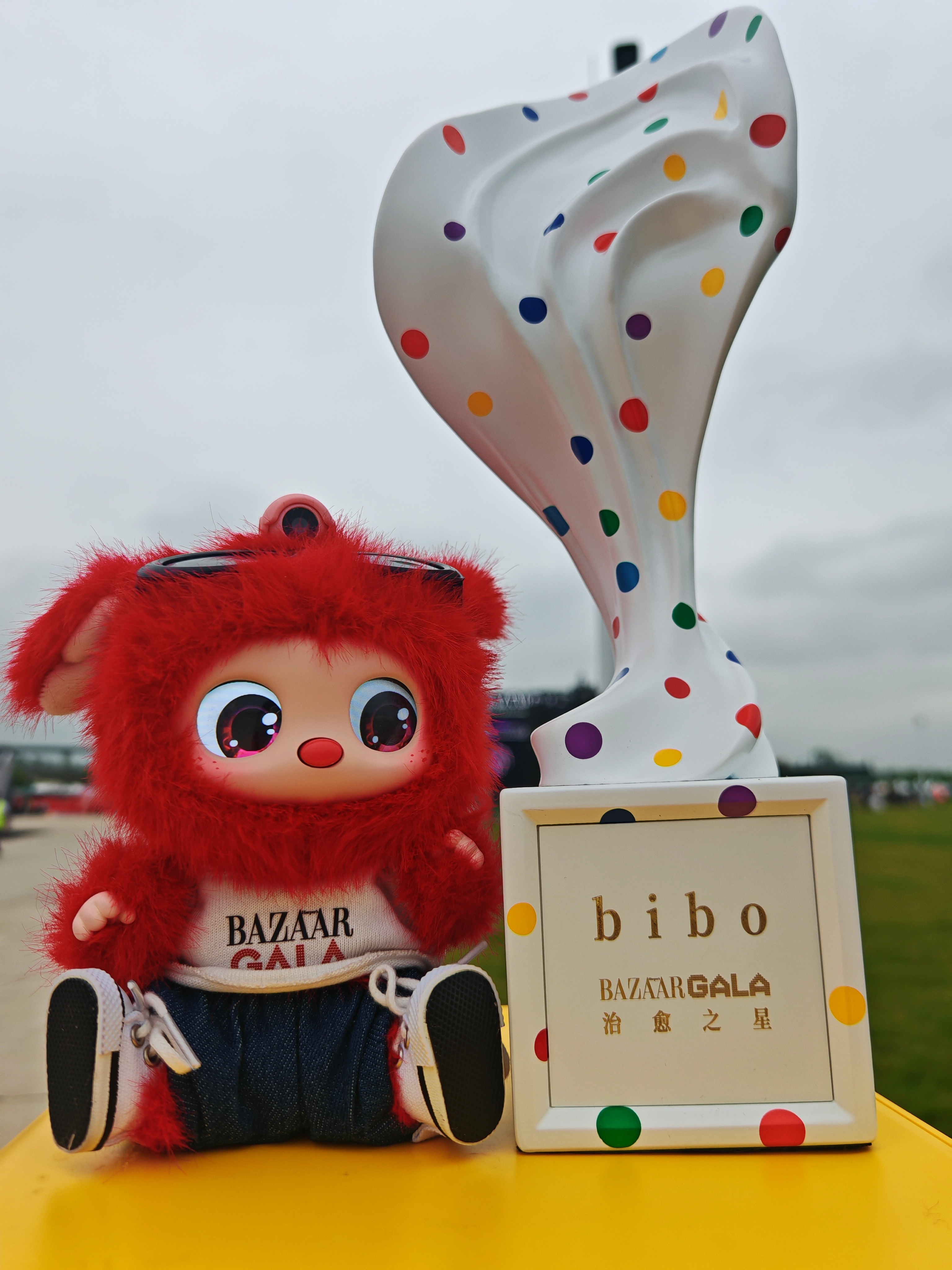

After winning three CES 2026 media honors, the nonverbal emotional robot steps into fashion and pop culture, blending edge AI, robotics and character design.
WU HAN, HU BEI, CHINA, September 30, 2026 /EINPresswire.com/ — bibo, a nonverbal emotional robot developed by Hangzhou-based Leim Technology, was named “Healing Star of the Year” at the 2026 BAZAAR GALA, appearing across the red carpet, awards stage and interactive areas alongside some of China’s best-known entertainers.
On the red carpet, a large-scale bibo character mascot interacted with Jackson Wang, YUQI, Victoria Song and Mika, while other guests including Liu Haoran, Joseph Zeng, Chen Chusheng, Mavis Fan, Gulnazar and Zhou Zhennan also stopped for photos and interactions. The smaller bibo robot appeared on the awards stage and in the event marketplace.
During the awards ceremony, the large bibo mascot took the stage with the small robot to receive the honor. The robot responded in its own vocal language, known as “bibo language,” while host Huashao jokingly interpreted: “My arms are too short. Could you help me hold the trophy?”
The appearance followed bibo’s international debut at CES 2026 in Las Vegas, where it received three CES-related media honors from Gadget Flow, Homecrux and Maxim.
From CES to BAZAAR GALA, Leim Technology is positioning bibo not simply as an AI device, but as an Art-Tech consumer robot that brings together artificial intelligence, robotics, character design, fashion and designer-toy culture.
At the BAZAAR GALA marketplace, that approach was demonstrated in a different way.
When music played, groups of bibo robots moved with the beat, translating sound and rhythm into visible physical expression.
Music detection and rhythm extraction are part of bibo’s on-device perception system. Leim Technology describes its architecture as an “edge-side fast brain” and a “cloud-side slow brain.”
According to the company, about 80% of bibo’s functions can operate locally without an internet connection, with response times under 50 milliseconds. High-frequency capabilities including facial recognition, gaze detection, music detection, rhythm extraction, sound-source localization and motion sensing are primarily handled on-device, while long-term memory, personality development and more computationally intensive functions are handled mainly in the cloud.
The architecture is built around a simple question:
Which intelligence has to happen instantly, and which intelligence can afford to be slow?
For an embodied robot, timing itself is part of the interaction.
A musical beat, a touch or a change in the direction of a sound may last only a moment. If a response arrives too late, the computation may still be accurate, but the interaction itself has already passed.
That emphasis on physical response and immediacy also sets bibo apart from voice-first AI devices.
bibo uses vision, sound, touch and motion sensing to perceive its surroundings, then expresses its internal states through gaze, movement, sound, rhythm and pauses. Leim Technology refers to this system as its “Emotional Brain,” a multimodal interaction architecture spanning perception, interpretation and physical expression rather than a standalone emotion-recognition feature.
Visually, bibo is closer to a designer toy than a conventional robot.
It stands about 15.5 centimeters tall and weighs around 330 grams, with plush materials and interchangeable clothing and accessories.
Inside its compact body, however, is a robotic system integrating cameras, microphones, touch and motion sensors, displays, AI computing units, motor control and servos.
The engineering challenge is to balance perception, computing and movement within the size, battery and cost constraints of a portable consumer product.
That combination is central to Leim Technology’s idea of Art Tech:
Robotics gives the character a body. AI gives it perception and behavior. Art and pop culture give people a reason to bring it into their lives.
Leim Technology also sees bibo as a way to encourage playfulness, curiosity and greater awareness of everyday life.
Rather than constantly asking users to talk to it, bibo is designed around smaller moments — responding to music, touch and changes in its surroundings, or simply remaining present.
From CES to BAZAAR GALA, bibo is exploring what AI might become beyond screens and chat interfaces: a more physical and cultural form of technology that people can see, touch, dress, carry and experience in everyday life.
About Leim Technology
Founded in Hangzhou in 2025, Leim Technology develops consumer robots at the intersection of emotional intelligence, robotics and art-toy IP. Its flagship product, bibo, is a nonverbal emotional robot built around multimodal perception, edge AI and embodied expression.
Gloria. GU
Hangzhou Leim Technology Co., LTD
+86 13567190047
email us here
Legal Disclaimer:
EIN Presswire provides this news content “as is” without warranty of any kind. We do not accept any responsibility or liability
for the accuracy, content, images, videos, licenses, completeness, legality, or reliability of the information contained in this
article. If you have any complaints or copyright issues related to this article, kindly contact the author above.

Media gallery

